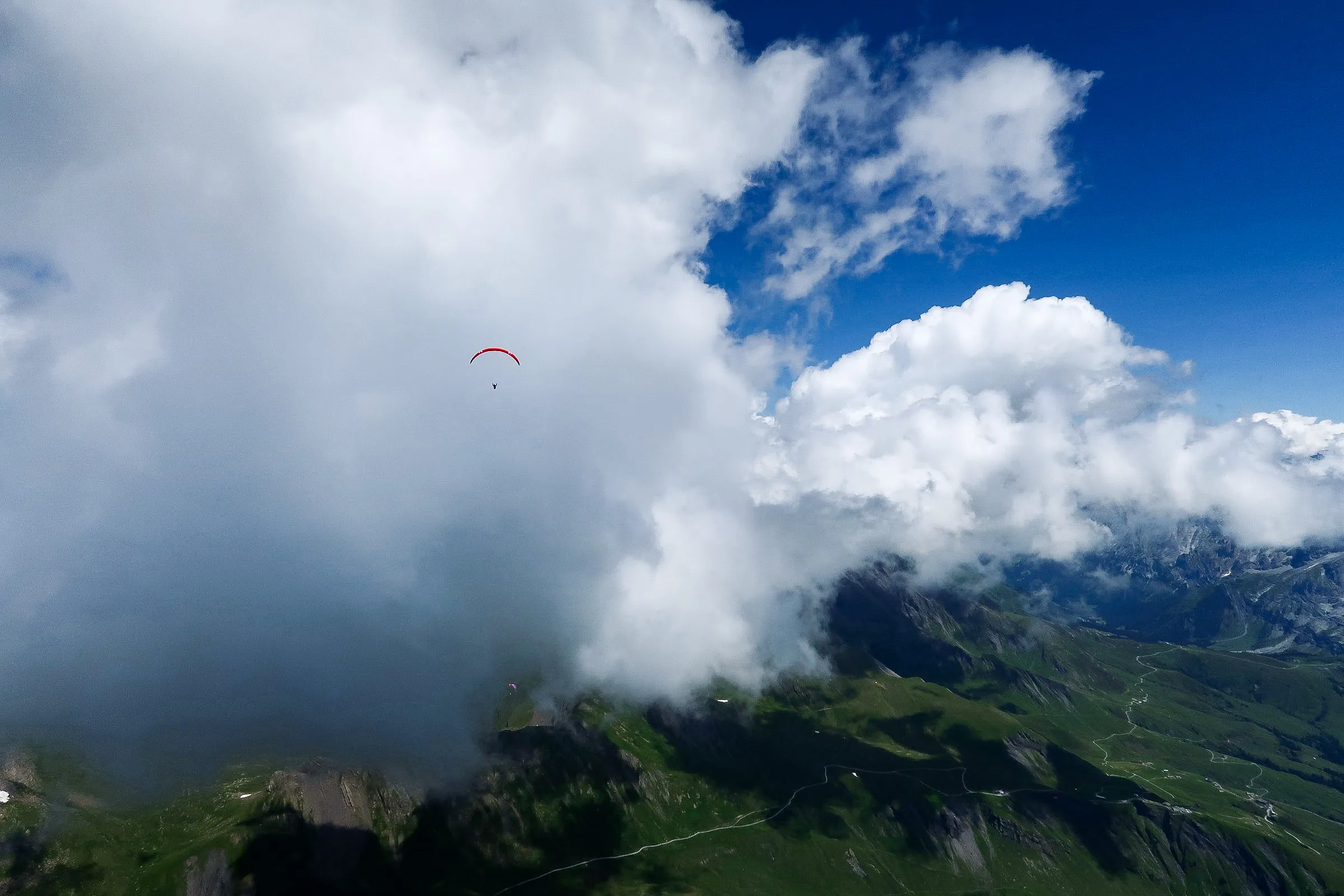
Thermal Camp in the Bernese Oberland
Learn to fly thermals safely, soundly and on purpose.
This camp is for the basics you build on for a whole flying life. We fly, and we take plenty of time for theory and focused ground handling.
For you if this is true: You hold the Swiss licence or at least IPPI 4 and want to find thermals and climb in them on purpose.
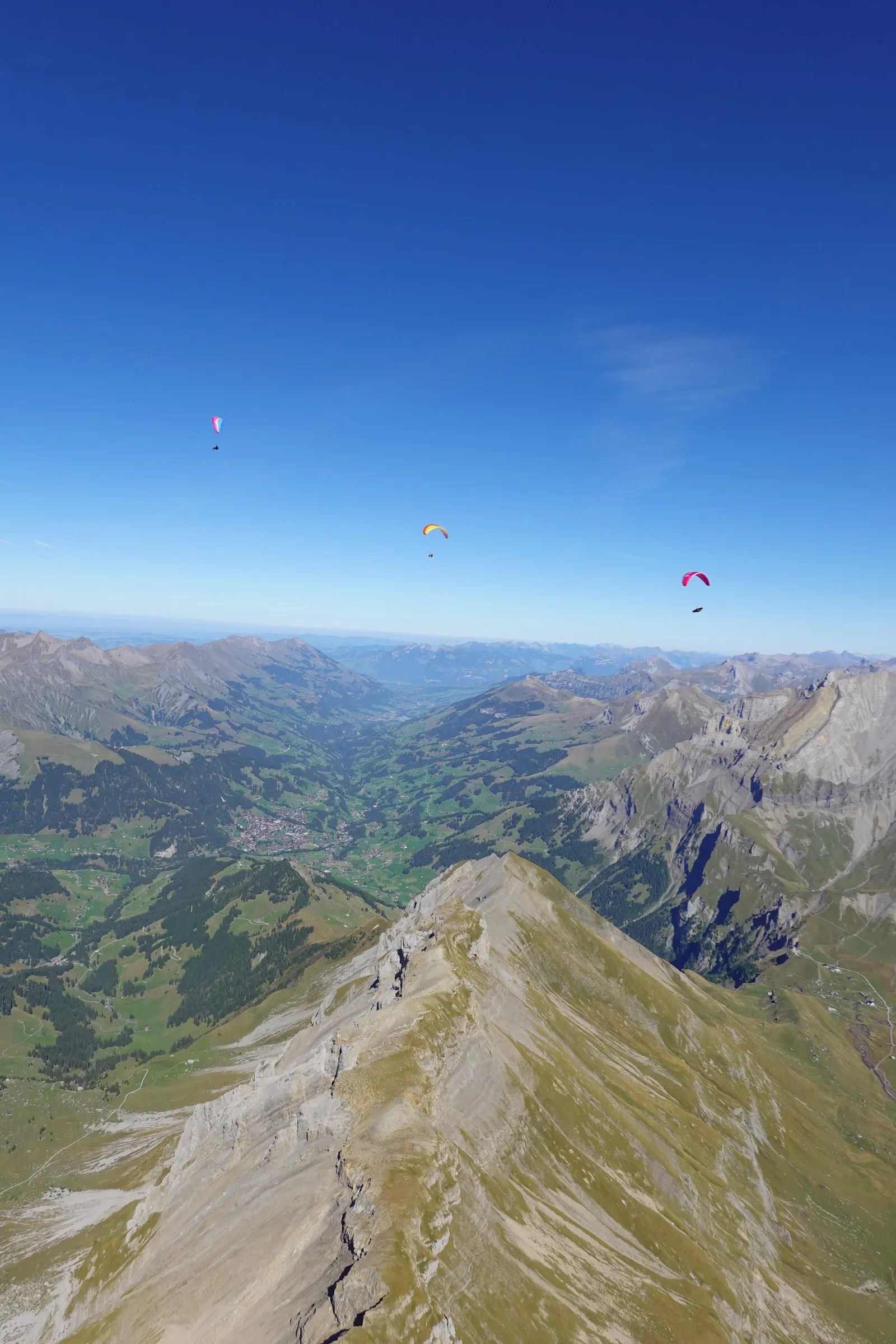
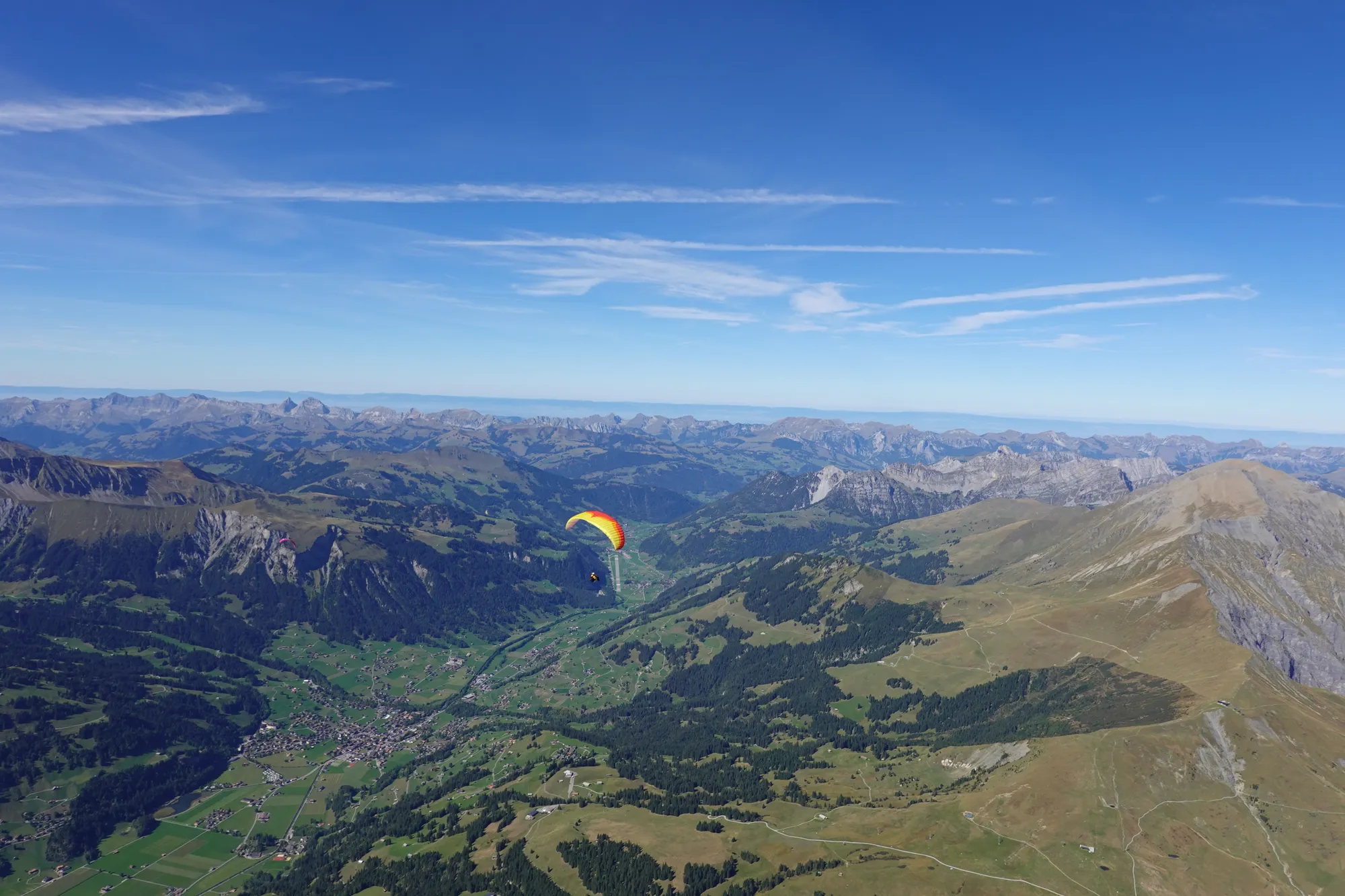
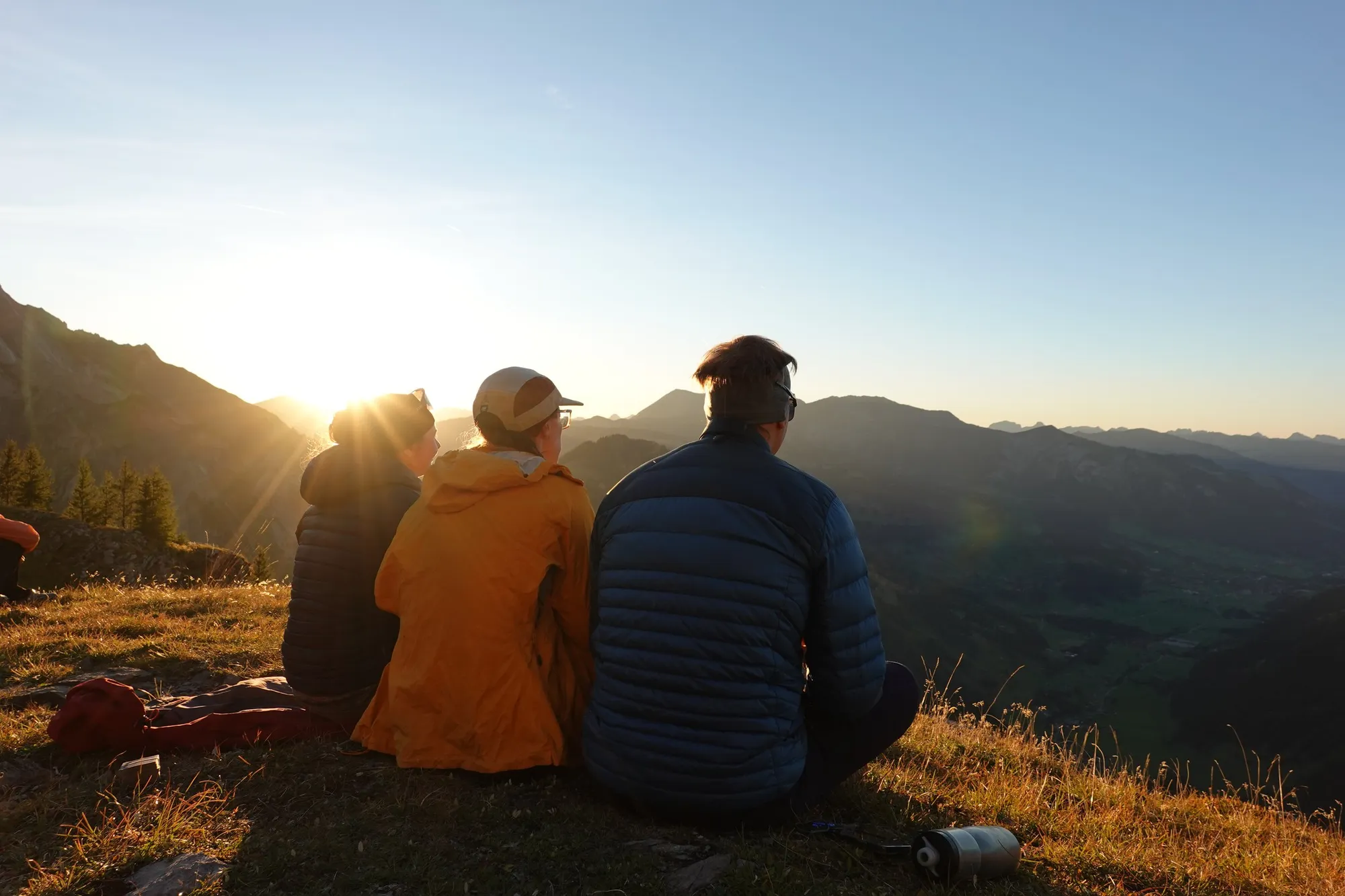
Finding thermals and climbing in them on purpose: that’s what we work on for our whole paragliding lives. And it’s so good when it comes together.
At the table and on the meadow: understanding the forecast, ground handling, learning or improving active flying. In the air it’s then about the thermal itself: finding it, centring and re-centring. And if it comes together on one of the days, we add a small cross-country flight, from one thermal to the next and back again.
One group, two coaches
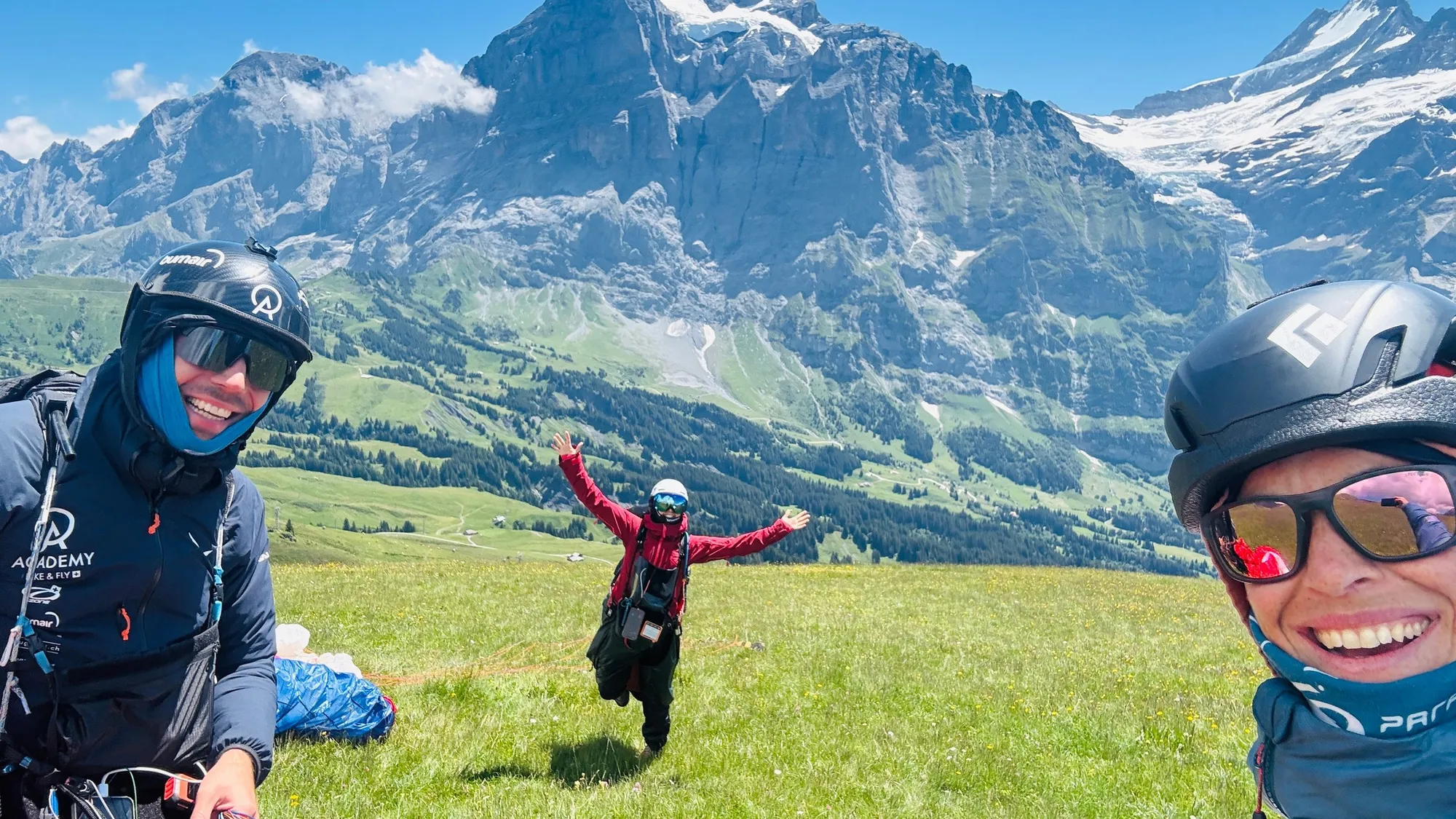
There are two of us for twelve people: Erika Dürr of ulligunde.com and Chris Fromm, that’s me. So we can split the group according to your needs.
If you’re struggling to find thermals at all before you’re back on the ground, that’s exactly what we work on: we explain how to read terrain and clouds and so recognise where best to look for them. After that it’s about centring the thermal efficiently and noticing when it’s time to look elsewhere. For flying cross-country with a confident feeling in particular, finding thermals on purpose is essential.
If you already find thermals but feel you’re stuck in one forever, keep getting out-climbed by others or usually find them turbulent, we look at your flying style and give you feedback and ideas for exercises.
Communication in the air matters to us and we have everything with us: radio and, when someone is round the mountain and out of range, a push-to-talk app on the phone (Zello). We also provide push-to-talk buttons and bone-conduction headphones, so you can talk easily and hear us clearly.
Who’s there
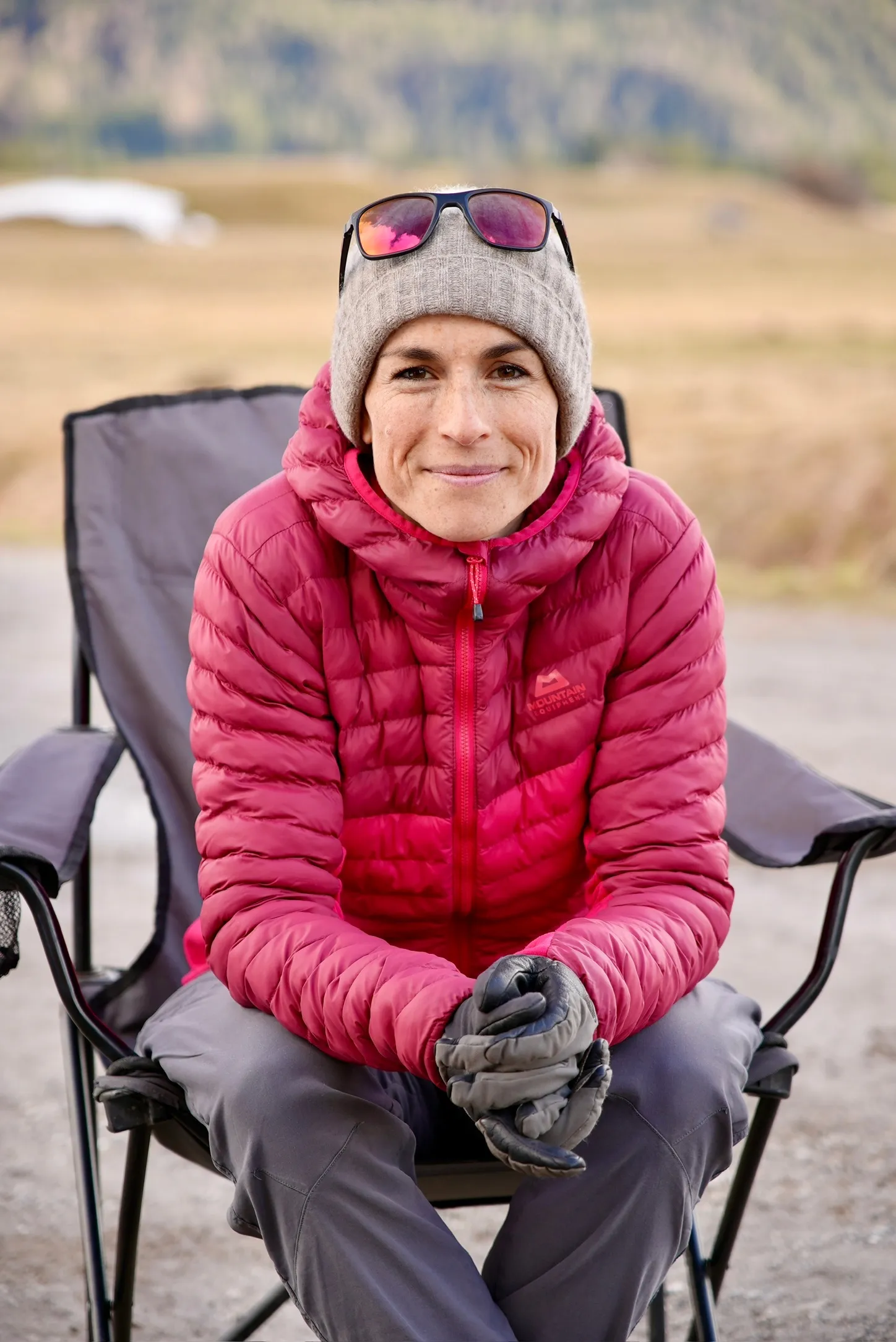
Erika Dürr is ulligunde: podcaster, photographer, hike-and-fly and cross-country pilot from the Allgäu. She runs cross-country seminars, B-licence courses and thermal courses. Launch technique and ground handling are close to her heart, because they are the basis for so much. What I see in her: she sees a person where they are and works out with them how to get to where they want to go. More about her on ulligunde.com (in German).
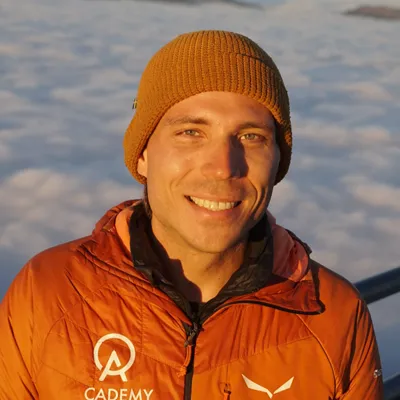
Chris Fromm, that’s me. I live near Interlaken, have flown cross-country in Valais and the Bernese Oberland for many years and accompany pilots in my XC camps and in coaching. What draws me to this camp: once the basics are really in place, a wonderful world opens up. That is exactly where we start. More about me on the home page.
Why Interlaken
From Interlaken there are launches in every direction that differ in how they fly. Almost every weather situation has its mountain here, and in the morning we decide where the conditions suit the group best.
The landing fields are big and the lifts take you back up. That gives you three or four flights a day, so three or four chances to catch the thermal. That’s exactly the point: you learn to climb out by repetition. We practise ground handling on nearby meadows. And public transport goes everywhere.
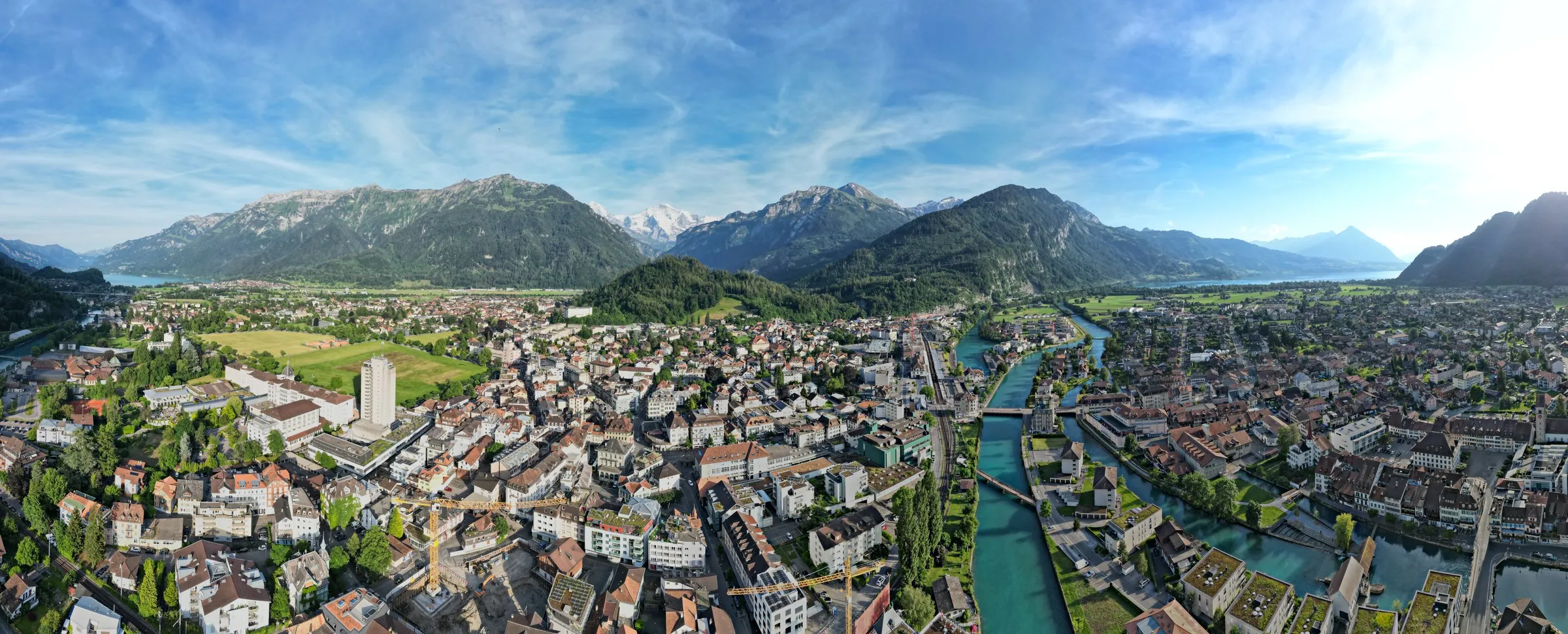
Photo: Wanderingchina, CC BY-SA 4.0, via Wikimedia Commons

Our base is the Backpackers Villa Sonnenhof at the Höhematte, the landing field in the middle of Interlaken. We have reserved the seminar room with its kitchen there for us: the forecast in the morning, the tracks in the evening, coffee from our own kitchen in between. From there we can get everywhere.
You book your own bed. We recommend the Villa: it currently has four-bed rooms available, as a guide around CHF 75 per night with breakfast. You book the bed yourself; if you’d like a four-bed room, tell us in the booking form and we add you to a WhatsApp group where you share out the rooms among yourselves. The Villa has only a few single and double rooms; if you want one, you find something in Interlaken or nearby yourself. And if you’re coming by camper van, tell us in the form as well.
Launches
- First, Grindelwald
- Niederhorn, Beatenberg
- Niesen
- Niesenkette
- Simmental
- Emmental, in south foehn conditions
- Stockhorn chain, in northerly conditions
- Planplatten, Meiringen
- Domodossola in Italy, in north foehn conditions, under two hours away by train
Which one it will be, we decide in the morning according to the conditions.
In bad weather too
In this camp the ground is not a fallback programme. Half of what you learn here happens at the table and on the meadow, and that works in any weather: everything listed under “On the ground”, plus the practice meadow. That’s why the camp goes ahead even if the forecast for the four days offers few flying days. And as soon as it flies, we’re on the mountain.
What you learn
On the ground
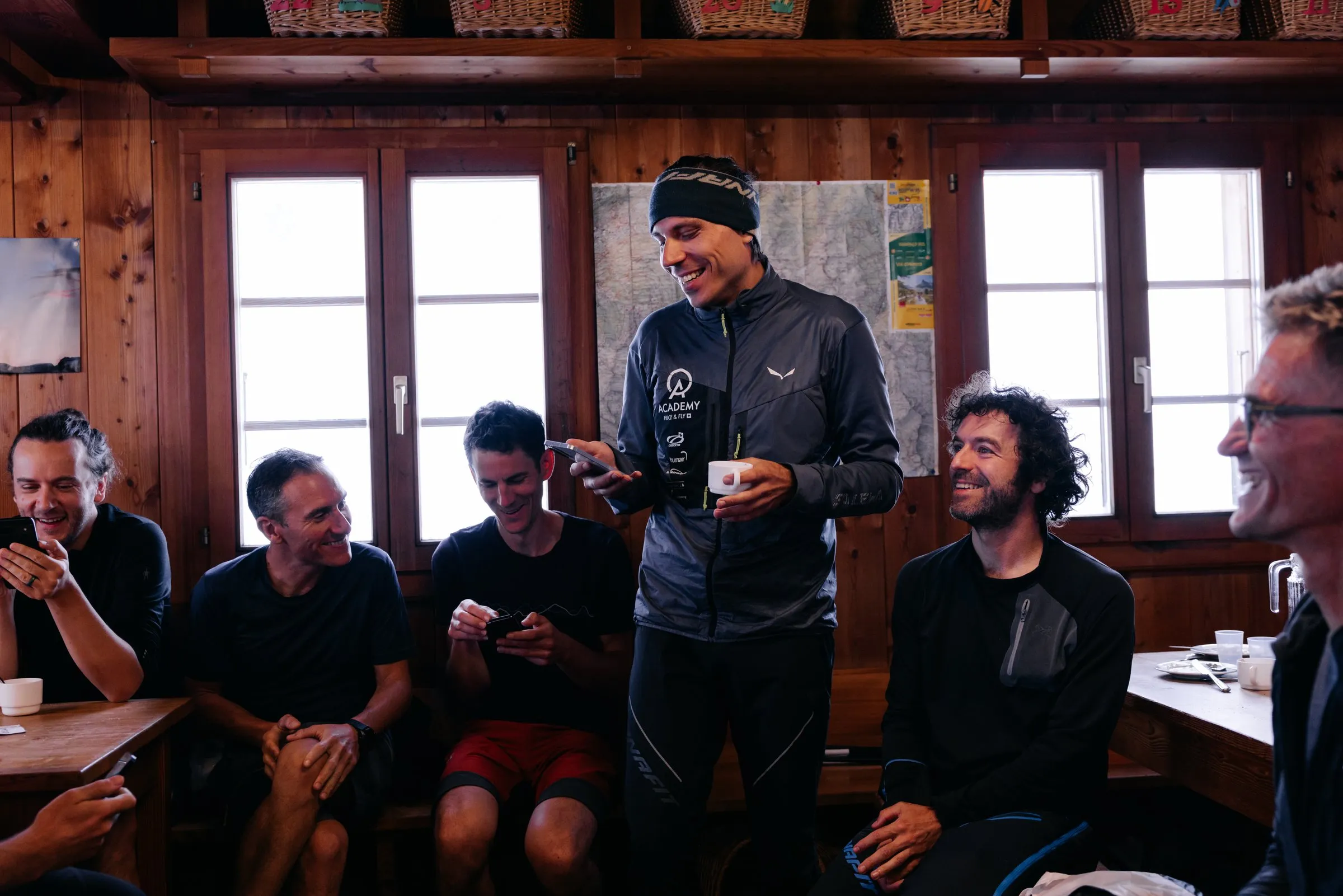
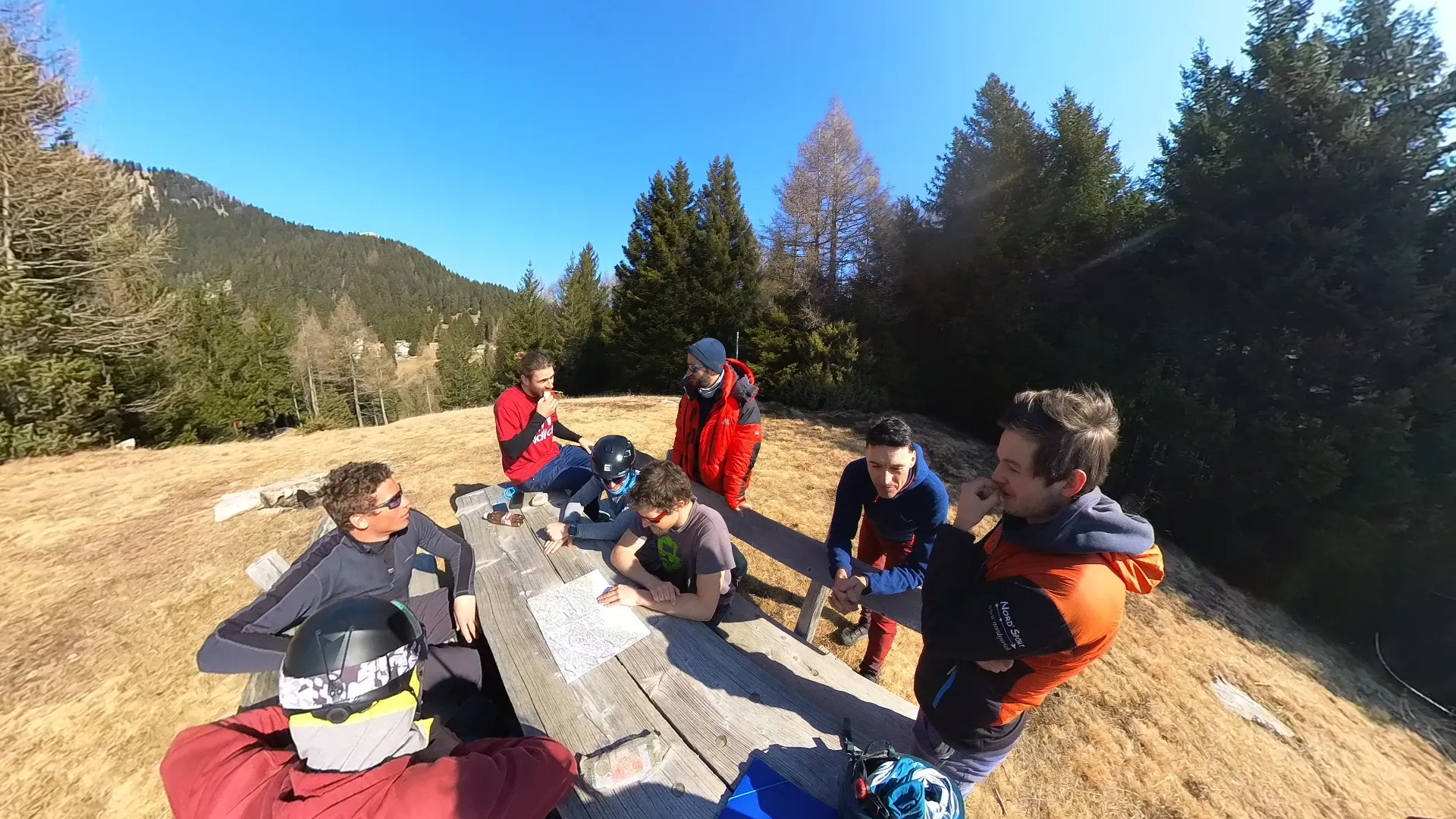
Finding the right day. Which day suits you and how you recognise it in the forecast. We read it together in modern tools like burnair or XCTherm, every morning for exactly that day.
The launch window. When it opens, when it closes and why. At launch you check it against the signs: the slope wind, the clouds, birds climbing.
Thermal flight or glide down. What the day offers and what you set out to do with it. In calm air you get to know the brake pressure you need in thermals.
Ground handling. On the ground you make the movements that in the air mean active flying. Only here you practise a hundred times an hour what happens to you three times a flight in the air: holding the wing, holding it blind, letting it surge and catching it.
In the air
Active flying. Canopy behind: brakes up. Canopy in front: brake and release smoothly. In between you hold the pressure in your hands. When the wing sits calmly above you, your head is free for centring.
Finding the thermal. Where it has triggered, how you can tell beforehand and from which direction you fly into it.
Flying in. As you fly in, the canopy drops back and the brake pressure rises. What your hands do then, you’ve already practised on the ground.
Centring and re-centring. Where the core is and how you get there. And how you shift your circle when it climbs better on one side.
Telling thermals apart. A thermal on a steep slope feels different from one over a hollow, one in the morning different from one in the afternoon.
When to leave. How you notice it getting weaker and where you expect the next one.
Safe in the group. Several wings in the same thermal are a topic of their own: direction of turn, spacing, looking up and down. We go through it on the first morning before we launch.
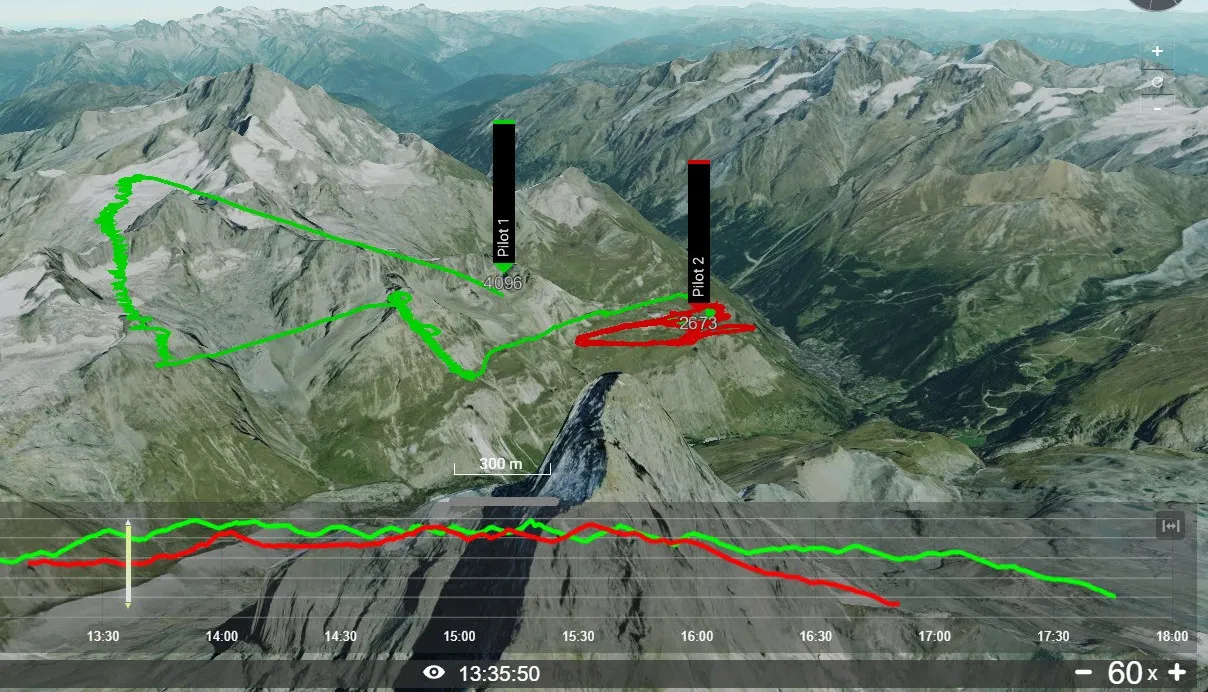
Reading your own flight. In the evening the track is on the table: where you turned wide, where you re-centred and what it gained you in climb. That becomes two or three exercises for your next flights.
Landing is part of it. Landing is never a mistake. If you feel unsure on a day, you fly to the landing field and we look on the ground at what it was.
How it runs
Wednesday. Getting to know each other on the first day matters to us, so this is a relaxed arrival: from midday everyone trickles in. Whoever is there early and if the weather allows goes flying spontaneously, arranged in the group’s WhatsApp chat. At 3:30 pm we meet in the seminar room and get to know each other: you tell us where you stand and what you hope to get from these days. Then we have dinner together, open end.
Thursday to Sunday. In the morning forecast and theory at the table, then up the mountain, everyone to their own. In the evening the tracks lie side by side and we talk about what came together today and what didn’t. On Sunday we finish around 6 pm.
To read beforehand
You can get a feel for it beforehand. The article Practising active flying in autumn has the moves for flying into and out of thermals and the ground exercises we do together in the camp.
Who it doesn’t suit
If you already fly cross-country and want to go further, you’re better off in one of the XC camps. Here we stay with the thermal.
And if you want four flying days guaranteed, you’ll be disappointed: the weather decides how many there are.
Included
- Four and a half days of guidance from two coaches, in the air and on the ground
- Two coaches for twelve people: we split according to your needs, depending on the day and the topic
- A weather briefing every morning: the forecast in burnair and XCTherm for exactly this day
- Thermal theory: where thermals form, where they trigger and how you fly into them
- Ground handling in three stages, plus the practice meadow
- Guidance in the air by radio and push-to-talk app, we provide the buttons and bone-conduction headphones
- Debriefing and track analysis in the evening: you come away from every flight with a takeaway
- Exercises for afterwards: two or three exercises for your next flights
Not included
- Travel to the camp: by train or by car, you organise it yourself. During the camp we get around by train and bus: where we land is still open in the morning.
- Accommodation: we recommend the Villa Sonnenhof, our base. It currently has four-bed rooms available, as a guide around CHF 75 per night with breakfast. You book yourself; for sharing out the four-bed rooms there is a WhatsApp group. The Villa has only a few single and double rooms; if you want one, you find something in the region yourself. Arriving by camper van works too.
- Cable cars, train and bus tickets, food
- Insurance: third-party liability is mandatory, accident and rescue insurance strongly recommended
- The way back after an outlanding: we choose the areas so that the way back works by public transport
What you organise yourself
- Your accommodation: you book it yourself. If you’d like a four-bed room at the Villa Sonnenhof, say so in the booking form and share out the rooms with the others in a WhatsApp group
A day at the camp
- 08:00
Forecast in the seminar room
We read the situation together, in modern tools like burnair or XCTherm.
- 09:00
Theory
The topic of the day at the table.
- 10:30
Up the mountain
Depending on the conditions the First, the Niederhorn or the Niesen. If it doesn’t fly, ground handling on a nearby meadow.
- 16:00
Back
By public transport back to Interlaken.
- 18:30
Dinner
Together in Interlaken.
- 19:30
Tracks and debriefing
The tracks side by side. The most important part of the day.
Times are a guide. The weather moves them, not the plan.
Requirements
- A valid licence: SHV or IPPI 4
- You hold the Swiss licence or at least IPPI 4 and want to find thermals and climb in them on purpose.
- Airworthy, checked equipment: your wing is expressly allowed to be an A or B
- Vario with GPS
- Third-party liability insurance with at least one million francs of cover, plus accident and rescue insurance
- Mobile phone with a data plan: communication in the air runs over a push-to-talk app (Zello)
- Four days in a row free. At shorter notice there are the XC Days.
I don’t much mind what is hanging above you: the line and the right day decide, not the equipment.
I fly with you, I don’t fly for you. Launch, route, turning back and landing are your decisions: my assessment is a recommendation, not a clearance.
Dates and schedule
- Whether it goes ahead
- By 5 May 2027 at the latest, three weeks before. From 6 people the camp is on; if fewer come together, I call it off and you get back everything you have paid.
- If the weather doesn’t play along
- If the forecast gives roughly two and a half flying days, the camp goes ahead. If a single day doesn’t work at the starting point, we go to where it does: your accommodation stays where it is and if the route calls for it, I organise a driver. If the whole week looks clearly worse, I postpone the camp. On a day when nothing works at all, we work on the ground.
- Starting point
- Interlaken
- Arrival
- Wednesday 26 May 2027, from midday: arrive at your own pace; whoever is there early flies spontaneously, arranged in the WhatsApp chat. At 3:30 pm we get to know each other in the seminar room, then dinner, open end.
- End
- Sunday, 30 May 2027, around 18:00
Which camp suits me?
Every camp assumes that you fly thermals. Beyond that, the camps differ in what you bring along and what you want. Three sentences, one of them applies to you and behind it are the camps that are built for it.
- Learn cross-country flying
- You climb out in easy thermals. You have hardly flown cross-country yet, your flights have been shorter than about twenty kilometres.Afterwards you fly the same line again, this time without me on the radio.Season start in Ticino 15–18 Apr 2027The Goms 13–16 May 2027Thermal Camp in the Bernese Oberland 26–30 May 2027 · this page
- Fly further
- You fly thermals and have already flown cross-country: about twenty kilometres or more. Now you want to go further than before, longer lines, a new area or high alpine terrain.Afterwards you decide on the way yourself: when to go, where to cross, when to turn back.Spring in Valais 6–9 May 2027Between the four-thousanders 5–8 Aug 2027Between the four-thousanders, second week 12–15 Aug 2027The southern valleys of Valais 2–5 Sept 2027Autumn between the four-thousanders 9–12 Sept 2027
- The big lines
- You have already flown thirty to eighty kilometres and want to fly the big lines of an area together, from valley to valley.Afterwards you read the day yourself and lay your line by it, instead of following a ready-made one.XC Camp Flex – The best place 14–20 Jun 2027
Not that far yet? If you don’t climb out in every thermal yet, you don’t have to wait until it comes by itself: a coaching day for two shows where you stand and you take two or three exercises away for your next flights. Over the season add briefing and debriefing, so that every flight turns into a takeaway.
If you’re unsure which sentence is yours, write me one sentence on where you stand: flights, wing, longest flight. I tell you honestly which camp is the next one for you and if there isn’t one, I tell you that too. And if three or four of you are at the same point, I make days out of it just for you.