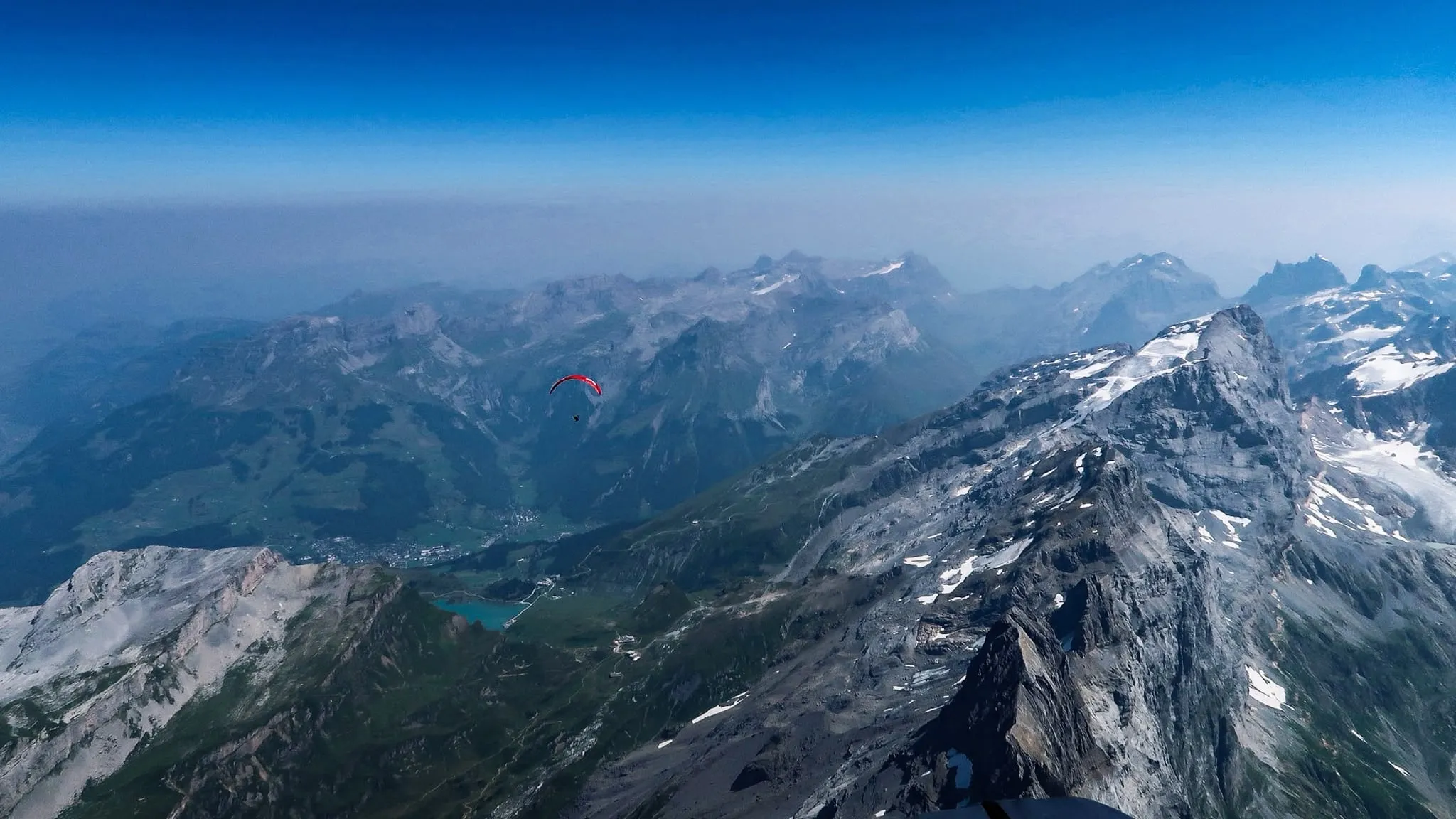
With Chris Fromm · Switzerland and neighbouring countries
Cross-country flying
in the Alps
We fly together on good flying days. I prepare the day and we go through it together the evening before, in the air I explain to you what I see and how I make decisions and in the evening we turn what we flew into a takeaway for the next flight.
Three ways to fly with me
Good flying days in the right place
Spontaneous XC Days
On days when it really works. Announced a few days ahead. Small groups.
How a flying day works
In the calendar
XC Camps 2027
Four flying days in a row, Thursday to Sunday. A fixed small group, plenty of time for briefing and debriefing.
Next camp: 15–18 Apr 2027, Ticino
See the camps
One to one
Coaching and briefing
A day in the mountains just for you, or online: day briefing, site briefing, debriefing of your flights.
In the mountains and online
The core offer
Spontaneous XC Days
On days when it really works. The forecast decides, not the calendar.
How you hear about it
Get the announcements
The announcements go out through the WhatsApp community “Spontane XC Days”: five days ahead the heads-up, three days ahead the plan, 48 hours ahead the binding announcement with region, route and meeting point. Only I can post there and the others can’t see your number.
No WhatsApp? Then I send you the same announcements by email: that’s what the second button is for.
The first announcements go out from February 2027. Anyone who joins now reads them first.
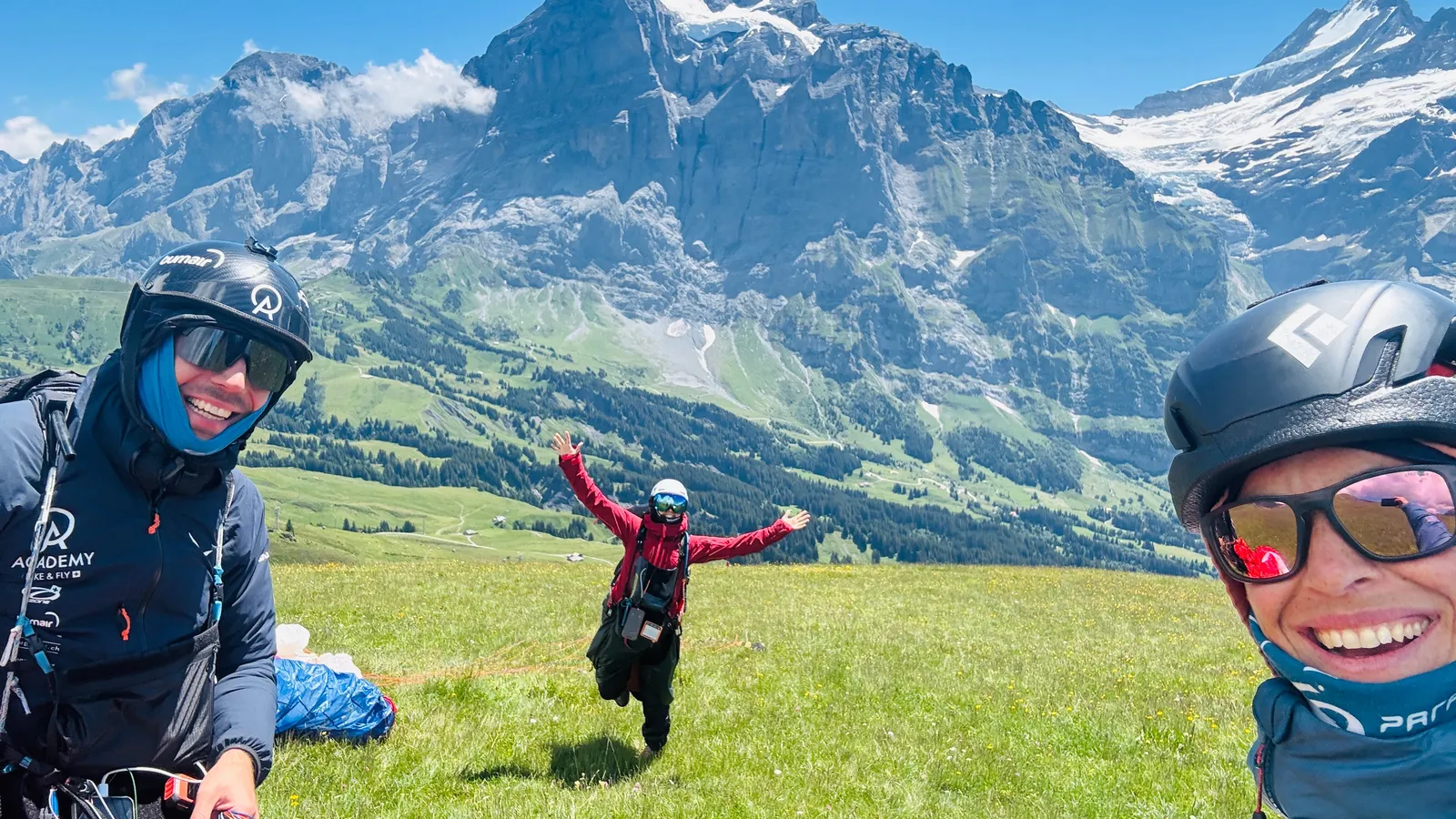
What it’s about
It’s about decisions
Cross-country flying is a small part thermal flying and a large part making decisions. And making decisions is something you can practise. Once you know the hazards, you suddenly see the options: where it goes through, where you would rather not fly, where Plan A, B and Z lie.The kilometres then come along by themselves.
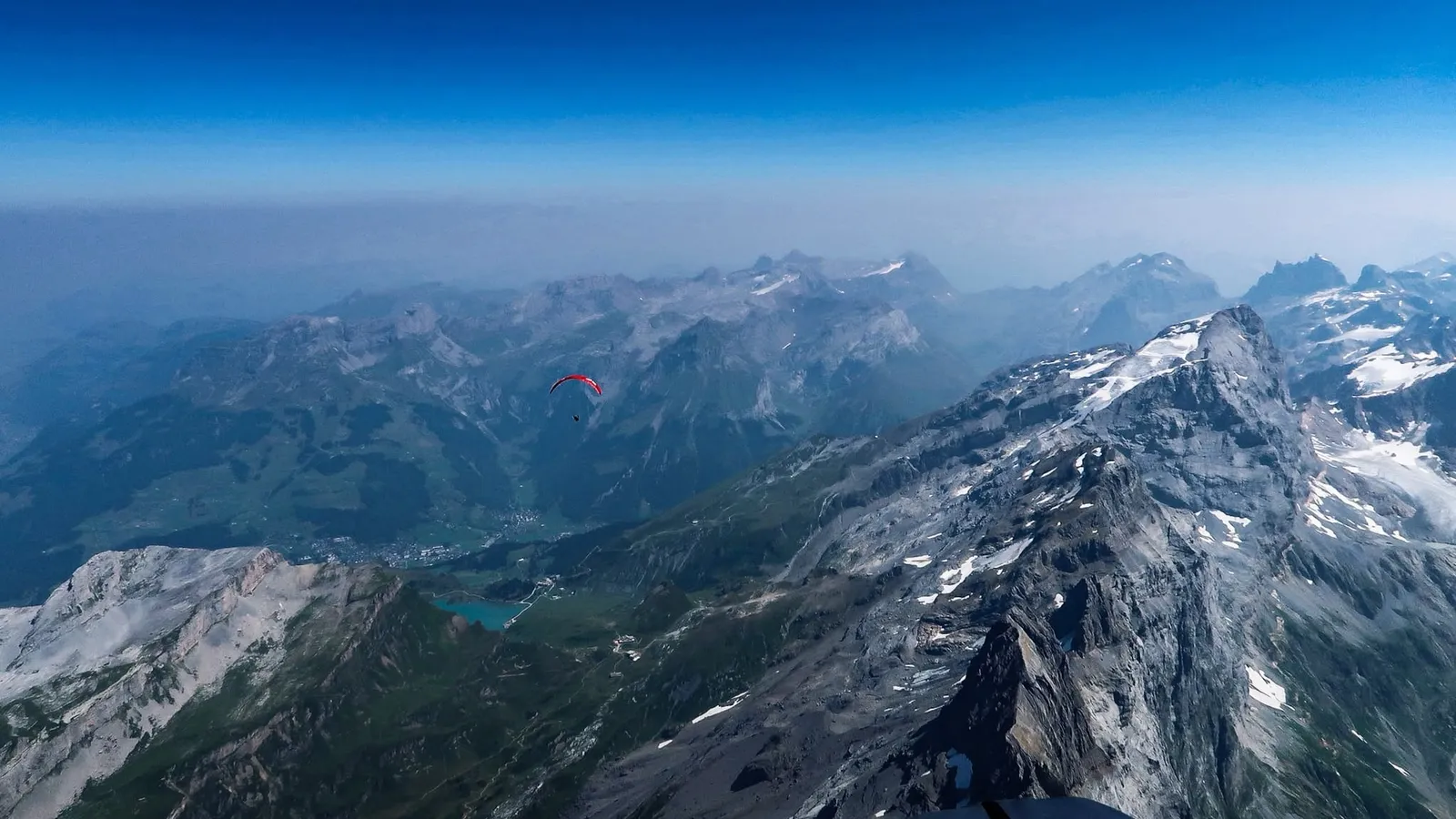
Reading the day
An expectation from the forecast, a cross-check at launch, live values in the air and then decide.
Plan A, B and Z
Think through routes with several options, instead of hoping for one single line.
Seeing hazards
Read valley wind, lee or strong wind early and know the options to avoid them.
Learning from the track
In the debriefing a flight turns into a takeaway you recognise the next time.
Suits you if …
→You can climb out in thermals.
→You know your local hill and want to go beyond it.
→You want to understand where thermals form and fly to them deliberately.
→You want to have a good landing option throughout the whole flight.
→You have been flying for years and want to know what takes you beyond your flights so far.
→Or you already fly cross-country and want to fly the big lines of an area together.
And wherever you are on this list: I don’t just push. I look at what you need on that day: challenging one person, showing another when waiting is the better decision. By the evening everyone should be a step further than in the morning.
What matters to me
Flying with foresight
For me, flying with foresight means reading the air before you are in it. Where is the lee and how far does it reach behind the ridge? Where does the wind accelerate, where does it wash over the slope and where do the thermals carry so well that they protect the slope? How strong will the valley wind be today, where does it press against a slope and where does it turn into a lee? And what do the clouds say about which direction it is actually blowing from up high? Those are the questions I keep trying to answer before, during and after the flight.
Questions that move me forward on a flight: Where do thermals form in the first place and how do I fly into them so that I hit them instead of grazing them? How high does it go today? How much height do I need to catch something again on the other side after the crossing? Much of this I plan the evening before, the rest I try to recognise in the air before I get there.
For me, that is the core of safety. The tricky moments rarely come out of nowhere, but from a decision that was made twenty minutes earlier.What I see early, I don’t have to fly my way out of later.
And it is the same way of looking that brings me the kilometres. When I see where the air is working and where it breaks off, I fly the line that carries and go into the crossing with a Plan B behind me. For me, safety and potential are not two topics but the same skill.
About me
Who’s behind it
Behind “streckenfliegen.com” is me, Chris Fromm. I live near Interlaken, have been flying since 2015 and spend the best days of the year in the Alps.
I learned to guide people somewhere else
Not in flying but in physiotherapy: understanding where someone stands right now, where they want to go and what actually helps them along the way. Not what I would do in their place. That is exactly what I do now with the paraglider.
Four years in Valais
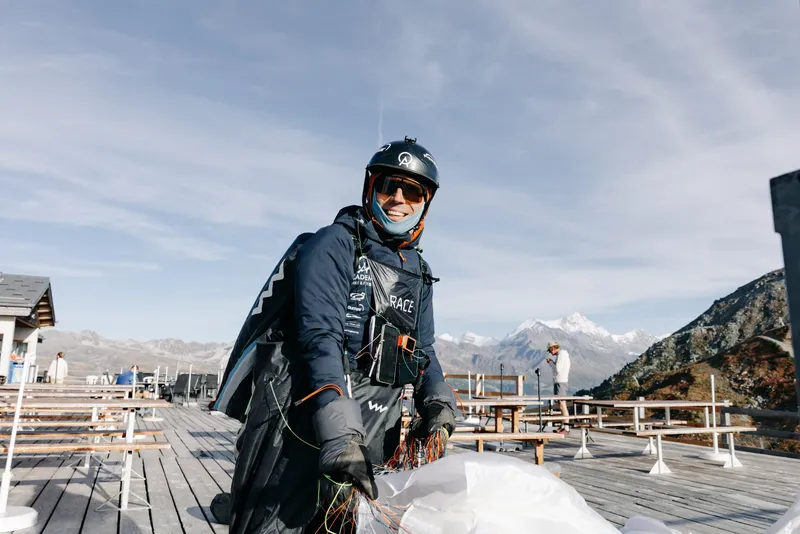
That is where I discovered cross-country flying for myself, in an exciting classroom. Valley winds from four directions, strong thermals and every northerly or southerly situation makes itself felt. A recipe didn’t get me far there: I had to understand what was happening right then. That shaped me more than anything else. Today I am at home in the Bernese Oberland and regularly back in Valais.
How it came about
It didn’t start with a plan, it started with questions. Before good flying days, messages came in: “What will the weather be like in Valais tomorrow?” I answered, reasonably well, as far as that works in a message, until at some point it became too much for me. Today there is the briefing the evening before for that. And after the flight the debriefing, with the question I like hearing most: “What do you think I could have done better?”
It was the same with the camps. Again and again someone asked whether I offered something like that. So I did it, first on my own, then for a few years through an employer, now on my own again. The talks came the same way and so did the one-to-one coaching.
That is how, over a few years, an offer came about that I didn’t dream up. Every part of it exists because someone asked for it. Since 2026 this has been my job. What stays the same: I explain what I see and how I make decisions.
What I love about cross-country flying
The tingle in my stomach before a crossing. I think I know what is waiting for me on the other side. I never know for sure. Plan B is ready, Plan Z, the landing, anyway. And if none of that works out, I am standing on the ground and have still learned something.
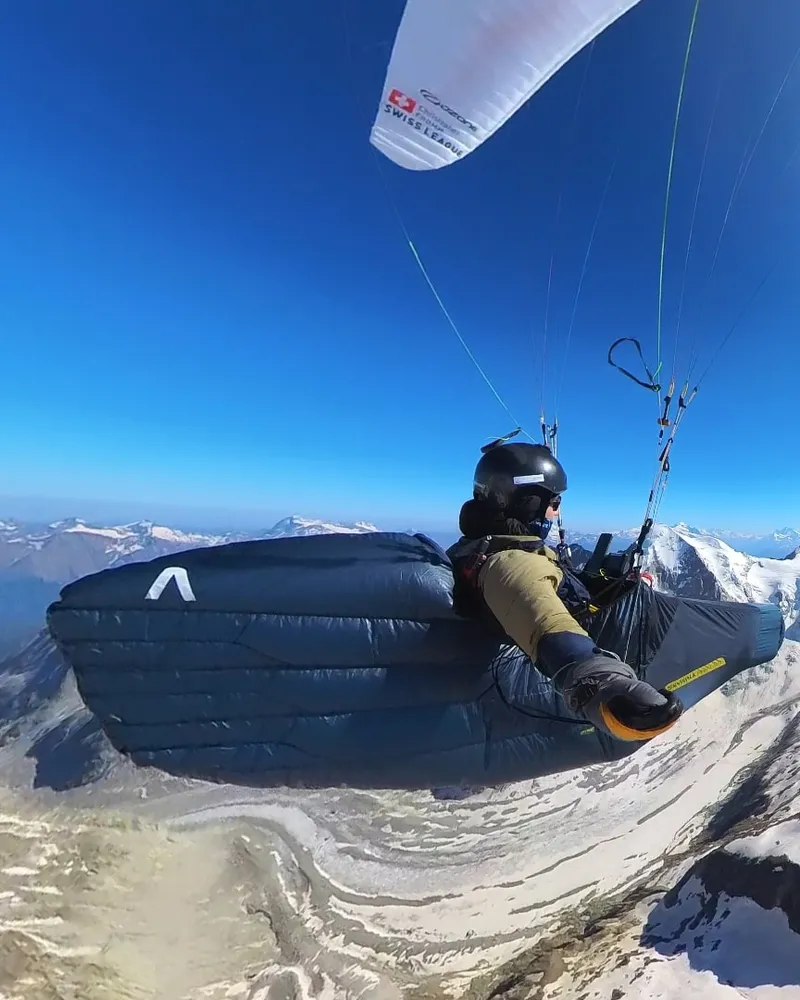
I like it best on my own or as a pair, on one-way flights in one direction. Picking a good starting point, a rough plan, a direction, good decisions in the air and then simply flying off, without knowing where I will be standing in the evening.
I would rather tell you what went wrong for me than what went especially well. You learn more from the first.
What it’s about for me
Free flying: deciding for myself where to go. For me, more knowledge means less fear. When I understand what the day is doing, I fly more freely.
That comes from craft. Good planning, observation on the ground and in the air, using the tools properly and taking something away from every flight. That is how I recognise the good days, make the better decisions up there and know where it gets delicate. Knowing the hazards doesn’t make me anxious, it makes me free: when I see them, the options come too.
What is hanging above you doesn’t matter to me. I celebrate a crossing on an A or B wing more than any kilometre on a competition wing. What counts are good decisions, the line and the right day, not the gear. What I want to give you is this independence: not that you need me, but that at some point you head out on your own and more freely.
Luck is what happens when preparation meets opportunity.Seneca
If that speaks to you: write to me. Ideally with a sentence about where you stand right now.
Testimonials
Chris strikes exactly the right balance between safety awareness and leaving your comfort zone. From his time at Burnair he brings an enormous amount of weather knowledge and shows you how to use the tools for flight preparation and debriefing for yourself. That way you learn to fly better and to understand flying better.
 Lukas BischofXC Camp · AI translation from German
Chris explained things to me that weren’t always visible or obvious to me and gave me tips without overwhelming me. He teaches you the things others do automatically without thinking about them. You never feel too “stupid” to fly, just that you need a bit more time and experience. That’s how I learned to feel at home in the air and to trust my instinct.
 Alina BurauOne-to-one coaching, Alpine crossing Valais–Bernese Oberland · AI translation from German
These days I travel around playfully instead of constantly fighting to stay up. I pay much more attention to the wind and the exact shape of the clouds and I’m no longer content with a good climb. With Chris I saw often enough that it gets even better a few metres further on. He explains while flying what he observes and why he decides the way he does and he stays close to you instead of waiting somewhere far away.
 UlligundeCoaching for two in the Bernese Oberland · AI translation from German
Chris is details orientated, excellent analysis of the forecast and then comparing that to actual live weather to make the best decisions already before the flight. This feedback loop continues in the air and is always adapting to the goals and level of the pilots. His knowledge of the Alps is extensive, knowing the key decision points and tell tales to look for. Chris is rarely in a rush! He will think about a strategy and think again before acting.
 Idris BirchOne-way buddy, more than 2000 km flown together
Newsletter
Every few weeks an email: what is coming up at the XC Days, the camps and the talks and now and then a small knowledge video or a short explanation to read. The short-notice announcement for a flying day still goes through the WhatsApp community “Spontane XC Days”. There it says 48 hours ahead where we are heading.
By signing up you allow me to send you the newsletter at this address. Unsubscribe at any time, one word is enough. What happens to your address is in the privacy policy.
Contact
Tell me briefly what it’s about
Spontaneous flying days, a camp, a coaching day, a debriefing or a talk for your club. I usually get back to you within two working days with a concrete suggestion and a quote.